NO USA Tariffs on Made in Canada goods

We want to live more naturally, without exposure to everyday carcinogens.

Join us as we research and source healthier and sustainably made products for the home.

Menu  

Articles

Articles

Remèdes maison naturels pour l’eczéma des bébés et des enfants

[ This article is avail in English - Natural home remedies for Eczema in Baby and Children ]

By Kristina Vidug & Dihan Chandra, Organic Lifestyle

Si vous lisez ceci, il est probable que votre enfant ou votre bébé souffre de cette affectation de la peau, et que vous cherchez des remèdes de maison pour substituer la vaste gamme de traitements pharmaceutiques et crèmes à base de stéroïdes qui existent.

Voici un bref aperçu du problème, y compris quelques suggestions provenant de naturopathes et de mères qui ont fait face à et qui ont guérit l'eczéma de leurs enfants. Ceci vous mènera, on l'espère, a une meilleure compréhension de la condition de peau pour que vous puissiez la contrôler.

Avis de non-responsabilité - Veuillez consulter votre professionnel de la santé local avant d'entreprendre toute forme de traitement.


Qu'est-ce que l'eczéma?
L'eczéma chez les bébés
L'eczéma chez les enfants
Pourquoi mon enfant a-t-il l'eczéma?
Que puis-je faire? Alimentation, soins personnels, soins à domicile, chambre à coucher des enfants, vêtements
Remèdes maison naturels pour l’eczéma des bébés et des enfants


D'abord, qu'est-ce que l'eczéma?
L'eczéma, aussi appelé la dermatite, peut affecter les enfants (et les adultes) de tout âge. Cette condition se démarque généralement par une peau sèche, démangeante et écailleuse. Bien qu'il puisse être tentant de gratter la peau - surtout pour les enfants - ceci peut potentiellement entrainer des infections. Une forme légère de cette condition de peau peut causer des irritations et des éruptions cutanées mineures, alors que des cas plus sévères peuvent entrainer un inconfort extrême à cause de l'aspect brut, éraflé et saignant de la peau.

• Bien que l'eczéma ne soit pas très agréable à voir, heureusement ce n'est pas une affectation contagieuse
• C'est une affectation assez commune
• La fréquence de son incidence augmente depuis les dernières 5 à 10 années

On croit souvent que l'eczéma est héréditaire, vu que les enfants dont les parents sont atteints ont 80% de chance de développer la condition eux-mêmes au cours de leur vie. Toutefois, un enfant ayant aucun facteur de prédisposition héréditaire peut toujours être atteint de la maladie.

L'eczéma chez les bébés

Les bébés atteints de l'eczéma commencent souvent à montrer les symptômes dans les premiers mois de leurs vies, soit des coupures dans la région des couches, des extrémités ou du visage. Parmi les enfants qui développent cette condition de peau avant l'âge de 1 an :

• 50% n'auront plus de problèmes à l'âge de 5 ans
• 25% auront toujours des problèmes à l'âge de 9 ans
• 12% auront toujours des problèmes à l'âge de 13 ans
• 6% auront toujours des problèmes à l'âge de 17 ans
• 3% auront toujours des problèmes à l'âge de 21 ans

L'eczéma chez les enfants

Les enfants développent habituellement l'eczéma entre 4 et 10 ans, soit comme première instance de l'affectation, soit comme récurrence d'un eczéma infantile. L'eczéma chez les enfants est différent de l'eczéma se développant chez les bébés, vu que les lésions sont plus localisées dans les plis du corps comme les genoux, les coudes et les chevilles. Heureusement, la plupart des enfants s'en sortiront avec le temps vers l'âge de 10 ans.

Pourquoi mon enfant a-t-il l'eczéma?

Finalement, l'eczéma se développe en conséquence d'une réaction de la part du système immunitaire envers des corps étrangers ou en réponse à des allergies, et cette réaction peut être amplifiée par une susceptibilité héréditaire.

• Les allergènes fréquents comme la squame animale, les acariens et le gazon peuvent causer des éruptions
• Des facteurs apparemment anodins comme une alimentation riche en produits laitiers peuvent aussi aggraver la maladie
• Le réchauffement excessif
• D'autres éléments déclencheurs comprennent une alimentation riche en gras saturés (par exemple, beaucoup de viande rouge et de protéines animales) et des aliments aussi variés que les arachides, le soja et le poisson.

Alors, que puis-je faire?

L'alimentation

Tenez un journal alimentaire et déterminer quels aliments causent vos réactions eczématiques. Lors des éruptions cutanées chez votre enfant, cherchez des aliments déclencheurs qu'il aurait pu manger récemment, et essayer de les exclure de l'alimentation pour une semaine pour voir si cela aide à soulager les symptômes. Les mesures fondamentales comme le remplacement des aliments transformés au profit des fruits et légumes peuvent être avantageux.

Soins personnels

Quelques conseils généraux pour le traitement de l'eczéma : garder la peau sèche et bien humectée. Ceci veut dire éviter à tout prix le contact avec des produits qui peuvent potentiellement être asséchants.

• L'utilisation de produits de nettoyage et de soins personnels naturels « verts » peut éliminer plusieurs irritants de peau, vu que bon nombre de ces produits sont formulés avec des produits chimiques nocifs. Ceci n'indique toutefois pas la fin des bains à bulles, par exemple ; vous pouvez simplement choisir un produit qui ne contient pas de sulfate de lauryle sodique.
• Des petites choses comme le fait de s'assurer que les ongles de votre enfant restent courts, afin de réduire la chance d'infections résultant du grattement causée par l'irritation.

Soins à domicile

Il y a aussi des mesures que vous pouvez prendre à domicile pour minimiser les réactions:

• S'assurer d'enlever les poussières et d'utiliser l'aspirateur aussi fréquemment que possible pour maintenir un environnement dépourvu d'acariens et de squames animales
• Réduire l'humidité de votre maison peut aussi aider
• Réduire le réchauffement excessif et l'accumulation de la transpiration durant la nuit

Nos clients ont aussi remarqué que l'utilisation d'un coussin en laine a aidé à gérer les symptômes de l'eczéma.

Ceci est le cas parce que la laine est beaucoup plus perméable à l'air que d'autres matériaux et elle réduit donc le réchauffement excessif et la transpiration qui créent les conditions propices à l'exacerbation des symptômes de l'eczéma, surtout au cours de la nuit. Si vous êtes préoccupé par une allergie possible à la laine ou par son caractère irritant, gardez à l'esprit que ce matériel est couvert d'une housse de coton biologique, ce qui assurera que votre petit ne viendra jamais en contact direct avec la laine. De plus, la laine biologique n'est jamais traitée avec des produits chimiques - ceux-ci sont la cause des allergies de la plupart des gens.

Vêtements

Les enfants et les bébés souffrants d'eczéma peuvent aussi bénéficier d'une sélection soignée de leurs vêtements.

• La sélection de matériaux légers et non-irritants comme le bambou aidera la peau à respirer, ce qui contribuera ensuite à gérer les symptômes de l'eczéma. [Un si grand nombre des mères entrepreneurs avec lesquelles nous traitons en tant que fournisseurs ont mis à pied leurs entreprises en vendant des vêtements de bambou, étant donné l'efficacité du matériel auprès de leurs enfants et la rareté des options de vêtements respirables).
• Évitez les matériaux synthétiques qui réduisent la circulation de l'air et emprisonnent l'humidité. Essayez de choisir des vêtements pour votre enfant/bébé qui ont un minimum de coutures, vu que celles-ci peuvent se frotter contre la peau et causer des éruptions d'eczéma.

Avec un peu de chance, les conseils ci-dessus vous aideront à gérer l'eczéma de votre enfant pour que vous puissiez retourner aux activités importantes de la vie.

Pour de plus amples renseignements, nous avons trouvé les liens suivants utiles : 
http://www.kidsinaustralia.com.au/parent-9/Eczema-in-Babies-and-Children-55.html
http://www.greenkiddie.co.uk/Eczema-treated-naturally.php
http://www.organicallyhatched.com/baby_eczema_how_to_treat_it_s/69.htm
Glossary - What is Organic, Define Natural, Green and Allergy Free Terms

Jump to:  bambooBPAbuckwheat pillowcarbon footprint - certified organic - cotton jersey - cotton pillowdamask fabric - Dunlop process - dust mite - ECOCERTecological footprintenvironmental allergyEnvironmental ChoiceEnvironmental DefensefairtradefoamformaldehydeGOTSGreenguardheavy metalhemphypoallergenicinnerspring mattressjacquardkapokKravlatexleadLEEDlow impact dyemattress covermattress padmattress toppermoisture padMCSnon-toxicOeko-texoff-gasorganicorganic cottonorganic woolPBDEphlalate - PLAPVCsateenshredded rubber pillowSkalsweatshop free - synthetic latex - TalalayveganVOC
   
  Definition
What is bamboo?

1) Bamboo leaves and the soft, inner pith from the hard bamboo trunk are extracted using a steaming process and then mechanically crushed

2) The crushed bamboo is soaked in sodium hydroxide to produce cellulose. A common misconception is that sodium hydroxide is a harmful chemical. If used in a responsible manner sodium hydroxide has little known effect on the environment and health of workers. It is routinely used in the processing of organic cotton into fibre and is approved by the Global Organic Textile Standards (GOTS) and the UK Soil Association. Sodium hydroxide does not remain as a residue on clothing as it easily washes away and can be neutralised to harmless and non-toxic sodium sulphate salt.

3) The bamboo cellulose is forced through spinneret nozzles (like a sieve) into a sulphuric acid bath that hardens the solution into viscose fibre threads and neutralizes the caustic sodium hydroxide to form Glauber's salt, sodium sulphate, which is used e.g. as a filler in lessive detergents. The process is the standard viscose process. This process is also used to manufacture fibres from wood pulp.

4) The fibre threads are spun into viscose yarn and rolled onto spools. According to textile classification so called bamboo is standard viscose.

  REF Wikipedia: Bamboo Textiles
  REF Organic Clothing Blog by the owners of White Lotus
   
What is Bisphenol A or BPA? BPA is controversial because it exerts weak, but detectable, hormone-like properties, raising concerns about its presence in consumer products and foods contained in such products. In September 2010, Canada became the first country to declare BPA a toxic substance.In the European Union and Canada, BPA use is banned in baby bottles.
  REF Wikipedia: BPA
   
   
What is a buckwheat pillow? Buckwheat hulls are used as filling for a variety of upholstered goods, including pillows and zafu. The hulls are durable and do not conduct or reflect heat as much as synthetic fills.
  REF Wikipedia: Buckwheat
   
   
What is a carbon footprint? A carbon footprint is the measure of the impact that living our daily lives has on the environment. In particular it refers to the amount of greenhouse gases an individual produces through their use of fossil fuels, electricity, household chemicals, etc.
  REF Carbonfootprint.com Information
   
What is certified organic? An agricultural product that is certified organic meets governmental standards for organic production, thereby allowing the producer of the product to legally state that it is organic. Different countries have their own standards for organic certification.
  REF Wikipedia: Certified Organic
   
What is cotton jersey? Refers to a specific type of cotton weaving technique - known for its super soft feel, often used in T-shirts.
   
   
What is a cotton pillow? The Organic Cotton Pillow is made from plants, that are grown without the use of any synthetic agricultural chemicals such as fertilizers or pesticides. Carded and then rolled, the organic cotton filling is surrounded by a strong organic cotton fabric.
  REF Wikipedia: Organic Cotton
   
   
What is damask fabric? Refers to a specific type of cotton weaving technique.
   
   
What is Dunlop process in rubber manufacturing? Dunlop is a method of producing molded pieces of natural latex foam rubber. The thick rubber sap, or serum, is whipped into a froth in a centrifuge, poured into a mold, covered, and steam baked. Natural sediments in the mixture settle to the bottom of the mold. How does it compare to Talalay? The Dunlop process produces a latex foam that is more dense, while the Talalay process produces a latex foam that is lighter and has more air in it. Using a cake as an analogy, Dunlop would be like pound cake and Talalay would be like angel food cake. If you were to weigh each as latex cores, the Dunlop would be heavier because it has more latex in it. Pick Dunlop because it's dense cell structure will hold the shape of the pillow better over time and will be less prone to sagging or indentations especially if you're a back sleeper and prefer a firmer feel.
  REF
   
What is a dust mite?

House dust mites are a common cause of asthma and allergic symptoms worldwide. The mite's gut contains potent digestive enzymes that persist in their feces and are major inducers of allergic reactions such as wheezing. The mite's exoskeleton can also contribute to allergic reactions. To avoid dust mites in the bedroom, a foam mattress and hypoallergenic bedding are recommended.

  REF Wikipedia: Dust Mites
   
   
What is ECOCERT? ECOCERT is a French organic and fair trade certification organization. ECOCERT primarily certifies food and food products, but also certifies cosmetics, detergents, perfumes, and textiles.
  REF Wikipedia: ECOCERT
   
   
What is an ecological footprint or environmental footprint? The Ecological Footprint has emerged as the world's premier measure of humanity's demand on nature. It measures how much land and water area a human population requires to produce the resource it consumes and to absorb its carbon dioxide emissions, using prevailing technology. A person can make informed choices about purchases, transportation and personal use of resources in order to reduce their personal ecological footprint.
  REF Footprint Network
   
   
What is an environmental allergy? Environmental allergies are an allergic response to substances a person inhales at home, school or workplace. They can be caused by dust, animal dander, mold spores or mildew, or feathers.
   
   
What is Environmental Choice? Environmental Choice is a Canadian governmental organization that has created the EcoLogo program, North America's largest, most respected environmental standard and certification mark.
  REF Environmental Choice
   
   
What is Environmental Defense? Environmental Defence is a Canadian-based non-profit environmental advocacy group that works on issues such as global warming, ecosystem restoration, oceans, and human health. The organization creates partnerships and offers market incentives to achieve its environmental goals.
 

REF Environmental Defence Canada

REF Organic Lifestyle: Environmental Defence Recommends


What is fair trade? Fair trade is an organized social movement and market-based approach that advocates the payment of a higher price to third-world exporters of goods, as well as higher social and environmental standards for those goods. The goal is to help producers in developing countries to make better trading conditions and promote sustainability. Despite its great intentions, its not without its criticisms - Read More
  REF Wikipedia: Fair Trade
   
   
What is foam? Foam (latex) is often used in pillows and mattresses. The foam is extremely durable, flexible, resilient and molds to your body. Foam is also naturally resistant to moisture build up, naturally antibacterial and hypoallergenic and mold and dust free.
  REF Wikipedia: Latex
   
   
What is formaldehyde? Formaldehyde is a chemical that is a known and labelled by US National Toxicology Program as a human carcinogen. Most commonly known for its use as an embalming agent for preserving human tissue, Clothing is often treated with resins which give off formaldehyde in order to make them wrinkle free, retain color, or avoid mildew in overseas transport. Formaldehyde is also often used in bed frames to enhance longevity and reduce mildew in wooden bed frames.
  REF Wikipedia: Formaldehyde
   
   
What is GOTS or Global Organic Textile Standard?

Global Organic Textile Standard (GOTS) is an organic certification standard for textiles used in clothing. The standard defines world-wide recognized requirements that ensure organic status of textiles, from harvesting of the raw materials, through environmentally and socially responsible manufacturing up to labeling in order to provide a credible assurance to the end consumer. The salient features of GOTS are:

1) Certification of the entire textile supply chain,

2) Environmental Criteria (eg., All chemical inputs (e.g. dyes, auxiliaries and process chemicals) must be evaluated and meeting basic requirements on toxicity and biodegradability/eliminability. All chemical inputs must be procured from GOTS certified suppliers.)

3) Environmental management (eg., Waste water from all wet processing sites must be treated in an internal or external functional waste water treatment plant before discharged to surface waters.)

4) Storage, packaging and transport (eg., Organic textile products must be stored and transported in such a manner as to prevent contamination by prohibited substances and commingling with conventional products or substitution of the contents.)

5) Record keeping & internal quality assurance

6) Technical Quality and Human Toxicity Criteria

7) Social Criteria (eg., sweatshop free)

8) Quality assurance system

9) Testing of Technical Quality Parameters and Residues

10) Principles of the Review and Revision Process.

11) On-site inspection and certification of processors, manufacturers and traders performed by independent specially accredited bodies is the basis of the GOTS monitoring system in order to provide a credible assurance for the integrity of GOTS certified textiles.


REF Global Organic Textile Standard


What is Greenguard? The Greenguard Environmental Institute is organization that aims to protect human health and improve quality of life by enhancing indoor air quality and reducing people's exposure to chemicals and other pollutants. Greenguard Certification ensures that a product has met some of the world's most rigorous and comprehensive standards for low emissions of volatile organic compounds (VOCs).
  REF Greenguard Environmental Institute
   
   
What is a heavy metal? Many metals, particularly heavy metals are toxic, including cadmium, lead, mercury and the radioactive metals. Why be concerned? These metals can imitate the action of an essential element in the body, interfering with the metabolic process to cause illness. Non-organic cotton clothing can sometimes be treated with dyes that include heavy metals.
  REF Wikipedia: Toxic Metals
   
   
What is hemp? Hemp fiber is very strong and durable, and is naturally resistant to mold and mildew. Hemp also requires few pesticides and herbicides to grow.
  REF Wikipedia: Hemp
   
   
What is hypoallergenic? Hypoallergenic textiles are those that are less likely to cause an allergic reaction. Cotton bedding is often used as a hypoallergenic alternative to wool or foam bedding.
  REF Wikipedia: Hypoallergenic
   
   
What is an innerspring mattress? This is a mattress made with coils, surrounded with quilted layers of organic cotton and wool that with extra tufting to achieve a firm mattress.
   
   
What is jacquard? Refers to a specific type of cotton weaving technique - the fabric with an intricately woven pattern.
  REF Wikipedia: Jacquard
   
   
What is a kapok pillow? Kapok fibre comes from the pods of the Ceiba tree. The fibre is very light, making the pillows comfortable, soft and malleable. The fibres repel dust mites and are not treated with toxic chemicals. They also repel moisture and are resistent to mold and mildrew. Finally, since only the pods are harvested, the crop is sustainable and does not need any pesticides or irrigation.
  REF Wikipedia: Kapok
   
   
What is Krav? Krav is a Swedish organization that develops and maintains regulations for ecological sustainable agriculture, and has created a labeling system for organic products. This certification is being gradually transitioned to GOTS where applicable.
  REF Krav Sweden
   
   
What is latex? Latex is natural rubber that comes from a tree. Inside the tree it is a milky substance comprised of proteins, alkaloids, starches, sugars, oils, tannins, resins, and gums that coagulates on exposure to air. Natural rubber is the most important product obtained from latex and is often used to make mattresses and pillows that are naturally antibacterial, hypoallergenic and dust mite repellent. Latexes may be natural or synthetic.
 

REF Wikipedia: Latex

  REF Annual Reviews: Latex
   
What is lead? Lead is a poisonous metal that can damage nervous connections (especially in young children) and cause blood and brain disorders. Lead poisoning typically results from ingestion of food or water contaminated with lead, but may also occur after accidental ingestion of contaminated soil, dust, or lead based paint. Lead can affect almost every organ and system in the body. The main target for lead toxicity is the nervous system, both in adults and children. Why is this important? Lead was a component of the paint used on children's toys - now restricted in the United States and across Europe- however, toys imported from China have been getting alot of attention in the media for containing lead based paints. Lead Free Toys
  REF Wikipedia: Lead
   
   
What is LEED (Leadership in Energy and Environmental Design) certified? LEED certification provides independent, third-party verification that a building, home or community was designed and built using strategies aimed at achieving high performance in key areas of human and environmental health: sustainable site development, water savings, energy efficiency, materials selection and indoor environmental quality.
  REF LEED Certification
   
   
What is low impact dye? A low-impact dye is a dye that has been classified by the Oeko-Tex Standard 100 (an international certification process) as eco-friendly. Generally, low impact dyes do not contain toxic chemicals or mordants (which fix the dye to the fabric), require less rinsing and have a high absorption rate in the fabric (~70%). High absorption rates and a decreased use of rinse water create less waste water.
  REF Fibre Reactive / Low Impact Dyes
   
   
What is a mattress cover? Mattress covers increase the life of a mattress by protecting it from spills, sweat stains, and wear and tear. Cotton covers are comfortable and durable, and breathe well, preventing overheating.
   
   
What is a mattress pad? Mattress pads protect a mattress, can be easily laundered and provide extra padding to make the mattress more comfortable.
  REF Wikipedia: Mattress Pad
   
   
What is a mattress topper? Mattress toppers enhance the comfort of a mattress. They are made of moisture-resistant wool, or dust mite-resistent latex foam.
  REF Wikipedia: Mattress Topper
   
   
What is a moisture pad? Moisture pads are generally made of 100% pure wool. It provides excellent protection to your mattress making it an ideal choice for children, the elderly or infirm sleepers. The wool is naturally water resistant and dries naturally.
   
   
What is Multiple Chemical Sensitivity or MCS? Multiple chemical sensitivity (MCS) is a chronic medical condition attributed to a person's exposure to chemicals in their household, work, and other environments where they spend time. Chemicals causing the sensitivity may include pesticides, plastics, synthetic fabrics, scented products, petroleum products, paints and chemicals used in the manufacturing processes of furniture, clothing and other household goods. Symptoms may include nausea, fatigue and headaches.
 

REF Wikipedia: MCS

  REF Introduction to Multiple Chemical Sensitivity Syndrome
   
What is non-toxic? Non-toxic implies that a product, substance, or chemical will not cause adverse health effects, either immediately or over the long-term. There are no specific standards for the 'non-toxic' term, so it is important to seek products which meet the standards of certification bodies for organic or chemical-free goods.
  REF Wikipedia: Non-toxic
   
What is Oeko-tex? The International Oeko-Tex Association comprises textile
representatives from Europe and Japan that create standards for textiles and is responsible for independent tests for harmful substances. The Oeko-Tex criteria catalogue provides a uniform, scientifically founded evaluation standard for the human ecological safety of textiles. Raw materials, intermediate and end products at all stages of processing throughout the manufacturing chain are tested and certified.
  REF Oeko-tex
   
What is off-gas? Off-gas refers to to chemicals that are used in building or in the process of manufacturing household goods that continually give off noxious fumes over long periods of time.  Culprits can include paints, varnishes, sealants and glues.
   
   
What is organic? Organic products are made of plant or animal sources that are grown using organic farming methods. These methods strictly limit the use of manufactured (synthetic) fertilizers, pesticides (which include herbicides, insecticides and fungicides), plant growth regulators such as hormones, livestock antibiotics, food additives, genetically modified organisms (GMOs), human sewage sludge, and nanomaterials. This production system sustains the health of soils, ecosystems and people. It relies on ecological processes, biodiversity and cycles adapted to local conditions, rather than the use of inputs with adverse effects.
  REF Wikipedia: Organic
   
   
What is organic cotton? Organic cotton is grown without the use of any synthetic agricultural chemicals such as fertilizers or pesticides. Its production also promotes and enhances biodiversity and biological cycles.
  REF Wikipedia: Organic Cotton
   
   
What is organic wool? Organic wool yarn is wool that is from sheep that have not been exposed to chemicals like pesticides and are kept in humane and good farm conditions.
  REF Organic Trade Association: Organic Wool
   
   
What is PBDE or Polybrominated diphenyl ethers? Polybrominated diphenyl ethers or PBDE are used as flame retardants in building materials, furnishings, plastics, polyurethane foams, and textiles. Studies with animals have shown significant health effects including thyroid hormone disruption, permanent learning and memory impairment, behavioral changes, hearing deficits, delayed puberty onset, decreased sperm count, fetal malformations and, possibly, cancer.
  REF Wikipedia: PBDE
   
   
What is a phthalate? Phthlalates are chemicals commonly added to plastics to increase their flexibility, transparency, durability, and longevity.  They can be found in products such as building materials, children's toys, paints and textiles.  Health risks include problems with adult infertility, cancer, and risks to fetal development.
  REF Wikipedia: Phlalate
   
What is PLA? PLA fiber starts with an abundant, natural and renewable resource - plants. The starch gets isolated from the other components of the plant and gets turned into sugar. The sugar is fermented in a process similar to making yogurt, to create lactic acid. Lactic acid is a naturally occurring material that gives the "tang" to yogurt and makes your muscles ache after a work-out. From lactic acid a molecule called lactide is created. Water is then removed and it gets crystallized to create the high-performance polymer - polylactide (PLA).
PLA performs extremely well in the wash and is therefore offered as an alternative to organic cotton. Our PLA fiber does not off-gas harmful chemicals and maintains its resiliency through repeated washings.
   
What is PVC or polyvinyl chloride? PVC is the third most commonly used plastic in the world and is commonly used in clothing and upholstery, electrical cable insulation, inflatable products and many applications in which it replaces rubber.  Health risks include cancer, endocrine disruption, endometriosis, neurological damage, birth defects and impaired child development and reproductive and immune system damage.
 

REF Healthy Building: PVC Facts

  REF Wikipedia: PVC
   
What is sateen? Sateen is a cotton fabric with a luster resembling that of satin. It is used for sheets and apparel.
  REF Wikipedia: Sateen
   
   
What is a shredded rubber pillow? A pillow made from shredded natural rubber (aka latex foam), can be shaped to fit your neck and is antibacterial, hypoallergenic and dust mite repellent. The organic cotton cover is removable and fully machine-washable.
  REF Wikipedia: Rubber
   
   
What is Skal? Skal is an independent inspection body for organic production in the Netherlands that works in accordance with the public law, based on EU regulation. SKAL strives to ensure that organic products truly originate from an organic production process by means of inspection and certification. SKAL is the legal holder of the EKO quality symbol, which stands for organic production certified by SKAL that meets the requirements of the EU-regulation for organic production.
  REF Skal
   
   
What is sweatshop free? Workers in a sweatshop can be forced to work long hours, work for very low pay (sometimes less than minimum wage) and be denied overtime pay. Sweatshops may violate child labor laws, and workers may face hazardous materials and situations.
  REF Wikipedia: Sweatshops
   
   
What is synthetic latex? Synthetic latex is created from two oil-derivatives: styrene and butadiene. There are many manufacturers who tout their mattress as "natural" latex, when in fact it's a blend of natural AND synthetic. Dunlop and Talalay latex can be either natural or synthetic. Synthetic latex, has a tendency to break down very quickly, and in fact the average queen-sized polyurethane foam mattress covered in polyester fabric loses HALF its weight over ten years of use as its polyurethane is oxidized into the air as dust. Synthetic latex and polyurethanes also have a tendency to off-gas. Finally, synthetic latex is unable to absorb and release moisture properly, causing heat problems for sleepers, as well as growth of molds and mildews.
 

REF Wikipedia: Latex

  REF Annual Reviews: Latex
   
What is Talalay process in rubber manufacturing? Talalay is a method of producing molded pieces of natural latex foam rubber. Process - A natural liquid latex rubber base is introduced to a closed mold that has been vacuumed of air. The mold is then frozen to stabilize the cell structure. How does it differ from the Dunlop process? The formulation uses many of the same base components as the Dunlop formulation, but without gellation reagents. The result is marketed as a healthier alternative to petroleum-based foams since petroleum-based foams give off volatile organic compounds as they age. In the marketing of products such as beds that include natural latex foams created with the Talalay process, these products are sometimes characterised as 'organic' or as completely natural. However this claim may not be completely true since unspecified curing agents are used in the Talalay process and ammonia is commonly used to stabilize liquid rubber. Pick Talalay if you typically prefer pressure relief because it's less dense than Dunlop.
  REF Wikipedia: Talalay Process
   
   
What is vegan? Vegan refers to a person who does not consume animal products, neither as food nor in their purchase of clothing and household goods.
  REF Wikipedia: Vegan
   
What is a VOC or volatile organic compound? Volatile organic compounds (VOCs) are emitted as gases from certain solids or liquids including paints and lacquers.  Health effects can include eye, nose, and throat irritation; headaches, loss of coordination, nausea, damage to liver, kidney, and central nervous system.
 

REF U.S. Environmental Protection Agency (EPA): VOCs


  REF Wikipedia: VOC

Yes Organic Lubricant - FAQs

Can I use Yes® with condoms?

Who is Yes® suitable for?

I suffer from vaginal dryness

For best protection against discomfort when making love we suggest 

Main differences between Yes water-based and Yes oil-based lubricants?

In what way is Yes® water-based, original in lubricant technology?

Please explain what you mean by talking about the discretion of your products?

In what way are your products versatile

Can Yes® be used with sex toys?

Why Organic Ingredients?

Why does it matter so much that your products are certified as organic by the Soil Association?

Is Yes® easy to clean up?

On what parts of my body can I apply Yes®?

What does Vegetarian Society approval mean? 

Can you advise me about the Best before dates / use by dates and shelf-life?

How should I store Yes products?

Detailed directions on how do you use your product 

How often I should use Yes water-based specifically for vaginal dryness

What ingredients are in Yes products


What are the preservatives in Yes products. And why do you use them?


Can I use Yes® with condoms?

Yes® water based is safe for use with condoms. It is not advised to use oil-based lubricants with latex condoms.

Who is Yes® suitable for?
Yes® is suitable for all sexually active adults of whatever orientation, enabling exceptionally pure and effective lubrication.

I suffer from vaginal dryness, and am looking for a vaginal moisturiser to ease my discomfort and to use when making love. Can you tell me which would be the best product for me?

Both Yes water-based and Yes oil-based can help with painful intercourse and vaginal dryness. They cannot cure vaginal dryness or vaginal atrophy but they can help significantly with easing the symptoms.
Yes water-based and Yes oil-based are sister products, they can be used alone or together depending on what your body needs. They are different and complementary in their actions:

Yes water-based works so well as a moisturizer because it is made from plant polymers that hold water and carry it to the dry vaginal tissues. They gently release water into the tissues and re-hydrate them. This can give the vaginal tissues some of the elasticity and moisture they used to have. Yes water-based is certified organic, this means that it is proven pure and natural. It is safe to use daily for atrophy and is also an excellent intimate lubricant (feels unbelievably real, no taste, no smell, not sticky). The pH of Yes water-based (due to the water content and the pH buffer) is low enough to restore the typical vaginal pH and so balance the whole vaginal environment. As Yes water-based is also very soothing and calms sore itching tissues and it can be applied several times a day if needed.

Yes oil-based is a stronger more long-lasting lubricant than Yes water-based. Yes oil-based contains oils and butters that feed the dry tissues and also can coat the lining of the vagina. Whilst this affords greater protection to fragile tissues when making love, it can prevent any water-based lubricant or moisturizer from being able to reach the dry tissues and re-hydrate them immediately afterwards. The oils and butters are fairly quickly absorbed and do make dry tissues more supple. But as Yes oil-based contains no water it cannot re-hydrate dry cells and cannot influence pH.

If you are looking for a vaginal moisturiser (for frequent use) and an intimate lubricant we suggest you try Yes water-based first.

For best protection against discomfort when making love we suggest you use both products together, (Yes oil-based applied first followed by Yes water-based). 

This gives robust lubrication from Yes oil-based and the extra slip from Yes water-based on top ensures long-lasting lovemaking with the maximum lubrication. When used on top of Yes oil-based, Yes water-based is not quickly absorbed so both partners get the benefit of natural feeling lubrication without the need to reapply regularly.

I'm not sure which lubricant to order and would like to know the main differences between Yes water-based and Yes oil-based lubricants?
Yes water-based and Yes oil-based are different in their actions:

Yes water-based is an outstanding lubricant and uniquely works well as a vaginal moisturizer too. Yes water-based is made with plant polymers that hold water and carry it to the skin. They gently release water into the tissues and re-hydrate them. This can give the vaginal tissues some of the elasticity and moisture they used to have. Yes water-based is certified organic, which means that it is proven pure and natural. It is safe to use daily for vaginal or penile dryness and is also an excellent intimate lubricant (feels unbelievably real, no taste, no smell, not sticky). The pH of Yes water-based is designed to match vaginal pH and so can restore the typical vaginal environment. The typical vaginal flora (Lactobacillus) creates an environment that naturally inhibits Candida/Thrush and other unwanted bacterial infections. Yes water-based is condom compatible, feels very natural and even out performs the old style synthetic lubricants. What more could you want? Maybe something that lasts longer than a water-based lubricant?

Then there is Yes oil-based. Yes oil-based contains oils and butters that feed and condition the skin. Yes oil-based has a different feel and action to Yes water-based, it is a long lasting lubricant and it is a conditioning skin food BUT it cannot re-hydrate or moisturize tissues as it contains no water. Unlike synthetic oils (Silicone: dimethicone or cyclomethecone and Petroleum derived oils: Vaseline or petrolatum) which smother the skin and are hard to wash off, the plant based oils and butter in Yes oil-based are gently absorbed and do make dry tissues more supple.

  • Yes oil-based is a thick cream at room temperature and a lovely smooth liquid at body temperature. Depending on the warmth of your room, you may need to warm it up in your hands first before you apply it. If it is really cold it can be hard to get out of its bottle.
  • Yes oil-based is not compatible with condoms, all oils (natural or synthetic) seem to dissolve latex which rather ruins the point of wearing a condom.
  • Yes oil-based works brilliantly as a massage oil leaving skin feeling supple and healthy. It has a very slight taste of chocolate, due to the cocoa butter.
  • Used together (Yes oil-based applied first followed by Yes water-based) they give extra protection and deliver great long-lasting lubrication with fine sensation.

In what way is Yes® water-based, original in lubricant technology?
Yes® has been designed with natural plant-based ingredients which are bio-adhesive, water-carrying and viscosity-retaining. The flax extract in combination with the Guar, Locust Bean and Xanthan gums provide these valuable properties. This formulation enables the product to carry water to the mucous membranes, to protect them and to continue to release moisture as it adheres to their surface for sustained hydration.

Please explain what you mean by talking about the discretion of your products?
Yes® lubricants offer you the discretion of products which, unlike most others, draw no attention to themselves through smell, taste or colour. We believe that lubricants should facilitate your pleasure, without masking your skin and senses. Sexual arousal is intimately linked to natural pheromones, and with Yes®, your own signals of desire are neither obscured nor confused, but – luberated!

Discretion is further aided by quiet one-handed dispensing. The easy squeeze, inverted bottle has an elegant valve release which makes application simple.

In what way are your products versatile?
The purity of Yes® products means they can be used as a skin conditioner and moisturiser, and for therapeutic and erotic massage. They can be used with each other for interesting results. Try water-based on top of oil-based for a new dimension in lavish and sustained slipperiness.

Can Yes® be used with sex toys?
Yes® water-based is safe for use with latex, plastic and silicone toys. Yes® oil-based is fine with plastic and silicone toys.

Why Organic Ingredients?
By working with nature and avoiding pesticides, chemical fertilisers and genetic engineering, Organic production promotes the health of the soil, plants, animals and us in the following ways:

  • The Quality
    The improved quality of organically produced crops and therefore of our ingredients
    • No growth hormones, chemical fertilizers or damaging pesticides are used
    • No genetic engineering
  • The Health Benefits
    The health benefits associated with using pure ingredients
    • No synthetic chemicals present to be absorbed by the skin
    • 60% of all chemicals put on the skin end up in the blood stream
  • The Standards
    The rigorous standards for certification
    • No compromise on ingredient quality
    • No Parabens allowed for preservation
  • The Environment
    The positive environmental impact
    • In the UK, organic farms have 44% more birds and more than five times as many wild plants
  • The Future
    The future looks better for all of us, when sustainable crop production methods, that work with nature, are employed

Why does it matter so much that your products are certified as organic by the Soil Association?
In the current climate the words "natural" and "organic" can be confusing to consumers and used in a misleading way by manufacturers, especially in the personal care products category. The Soil Association upholds the strictest standards in awarding their certification and their symbol on products gives you the guarantee and reassurance of an authentically organic product.

Is Yes® easy to clean up?
Yes. Water-based will leave the skin clean and comfortable after use and will not stain sheets or fabric. Oil-based is mostly absorbed by the skin and washes cleanly out of textiles.

On what parts of my body can I apply Yes®?
Yes® is ideal for play, body glide, massage and are of course suitable for vaginal, anal and oral use. Both Yes® water-based and oil-based are safe even if swallowed, as they are made from pure food quality ingredients, although we do not recommend eating vast quantities (they are unflavoured) - they are designed for lubrication not consumption.

What does Vegetarian Society approval mean?
The Vegetarian Society's trusted "Seedling" symbol awarded to Yes water-based and oil-based lubricants is a further endorsement of our ethics and ingredients philosophy. As an educational charity promoting understanding and respect for vegetarian lifestyles, they have approved our products as free from animal derived and GMO ingredients, as well as cruelty free.

Can you advise me about the Best before dates / use by dates and shelf-life?

Yes Water-based:

  • 25ml - 3 Months from opening
  • 75ml/125ml - 6 Months from opening
  • Best by Date - 14 Months from manufacture

Yes Oil-based:

  • 25ml - 6 Months from opening
  • 75ml/125ml - 12 Months from opening
  • Best by Date - 24 Months from manufacture

How should I store Yes products?
Various things can cause the life of any product to be shortened, extreme temperatures (leaving it on a sunny window sill) or the addition of bacteria or fungi when removing the lid/cap.

Yes products, as they are made from natural ingredients, are more sensitive to harsh conditions than their synthetic chemical cousins (actually more distant than cousins). Do not leave them on a sunny window sill, keep them at room temperature, no freezing or boiling, keep the lid on when you are not using them. They are not too sensitive, so you don't have to turn out the light although they do like a little candle light.

I have not had to use a personal lubricant before, can you give me detailed directions on how do you use your product (how to apply Yes)?
We don't like this question and have tried not to answer it. In our experience of other personal lubricants, such directions for use tend to be patronising or pathologising or completely mystifying (why a pea sized amount – is that a big pea or a little one?. all of which we wanted to avoid. As we all vary so much, we prefer not to be directive about the application, recommended amounts or positioning of our product. But that approach was not really helpful so here goes:

Yes water-based is a gel, that becomes less thick – more liquid as it is used. Rub a little in your fingers and you will see how it liquefies. For use as a personal lubricant, Yes water-based can be applied before and or during lovemaking. Privately, before lovemaking, women can put it on, in and around the vulva and vagina, using fingers to insert the lubricant well into the vagina, as well as to the labia. Applying lubricant during lovemaking can also become part of the intimate experience, enjoyed by both partners.
If you are in any doubt about how much to use, go for more not less, water-based lubricants are not known for lasting a long time (that's one of the reasons why we make Yes oil-based). Yes water-based contains no glycerine. Glycerine makes lubricants feel sticky and can dry tissues too. So using lots of Yes water-based will not leave you feeling sticky. We lean much closer to the more-than-one broad bean approach than a single petty pois.

When using Yes water-based as a vaginal moisturizer we can be more helpful and specific. Use about 5ml (a small teaspoon full). Put it on wherever the dryness occurs and depending on the severity of your dryness you may need to add more in a day or two days. Yes water-based releases water to dry tissues and will need reapplying when the tissues have used up all the water. As Yes water-based is also very soothing, it calms sore itching tissues and can be applied several times a day if needed.
Yes oil-based is a thick cream at room temperature and a lovely smooth liquid at body temperature. Depending on the warmth of your room, you may need to warm it up in your hands first before you apply it. If it is really cold it can be hard to get out of its bottle.

All of the above directions for use as a personal lubricant apply to Yes oil-based too. Although Yes oil-based is not compatible with condoms, all oils (natural or synthetic) seem to dissolve latex.
Whilst Yes oil-based contains no water and so cannot rehydrate / moisturize dry tissues, it is made form skin nourishing butters and oils and is a long-lasting intimate lubricant and a great massage oil.
For all Yes products: Their purity and naturalness means there are no ingredients that have concerns attached to them, they are hypoallergenic and they have no known side effects. So we advise that you use Yes products liberally for best effect.

Can you tell me how often I should use Yes water-based specifically for vaginal dryness, and how much to use each time?
Not really. I don't know how much will make it ok for you. This is why we worked so hard to get our organic certification – you can use as much or as little as feels right for your body. The purity of our products mean they are entirely suitable for daily use and can be applied as frequently as your body tells you it needs.

How much is used each time depends on whether you are using Yes water-based as a vaginal moisturiser (as much or as little as you need - typically 3-5mls per application) and/or for sexual intimacy. For making love you will need to use more as it will get "used up" more quickly.
Also if you are experiencing soreness when making love try and combine them by using Yes oil-based first and then Yes water-based on top, as this can give greater protection and increased longevity. Essentially it depends upon on how your body reacts and the degree of vaginal dryness you experience, as to how much you use and how often.


Can you let me know what ingredients are in Yes products, and help me to understand why they are so much better for me?
All Yes products are certified organic, which is your guarantee of product purity, giving you the assurance there is nothing unknown, hidden, or damaging present in our organic products.

  • YES Water-based: Aqua (Water), Aloe barbadensis (Aloe Vera)*, Cyamopsis tetragonolobus (Guar Gum)*, Ceratonia siliqua (Locust Bean Gum)*, Linum usitatissimum (Flax extract)*, Xanthan Gum, Citric Acid, Potassium sorbate, Phenoxyethanol 

  • YES Oil-based: Butyrospermum Parkii (Shea Butter)*, Prunus Dulcis (Sweet Almond Oil)*, Helianthus Annuus (Sunflower Oil)*, Theobroma Cacao (Cocoa Butter)*, Cera Alba (Bees Wax)*, Natural Tocopherols (Vitamin E) 
    *organically grown ingredients... Yes products are protected by international Patents.

Yes products contain:

    • No petrochemicals (thick oils like petrolatum that coat skin)
    • No parabens (skin irritants and have cancer concerns)
    • No known skin irritants
    • No grapefruit seed extract because it is often adulterated with parabens)
    • No glycerine/glycerol (Causes Thrush outbreaks, is a skin irritant and leaves skin sticky)
    • No hormones (safe to use if recovering from Breast Cancer or wanting to avoid HRT)
    • No silicone (coats skin, feels yucky and is really hard to wash off)
    • No propylene glycol (cell wall disrupter, pulls chemicals through and into the blood stream)

Yes products do contain pure plant extracts laden with skin healing and nourishing properties, grown and manufactured to organic standards. Why would you want to put old style synthetic chemical lubricants on such a vital sensitive area when there is a natural and pure alternative. Chemicals on your "Crown Jewels" - I think not. We believe that Yes products are the safest on the market, anywhere in the world.

What are the preservatives in Yes products. And why do you use them?

Yes oil-based has no preservatives in it, only Vitamin E which acts as an antioxidant and extends the shelf-life.

Yes water-based has two preservatives in it. Both occur in nature, both are synthetically produced. They are Phenoxyethanol and Potassium sorbate. We have to buy the synthetically produced versions as (a). we don't use animal body parts and (b). we cannot find commercially available plant extracted sources. They are approved by the FDA and UK/EU bodies for food and/or cosmetic applications, as well as by our Organic certifier: The Soil Association. To date we have found no naturally occurring preservative package that is safe, non irritant and effective. Used correctly (not above 1%) both these preservatives do a brilliant job without being skin irritants or having any other concerns associated with them. In the absence of chemicals know to be penetration enhancers, like Propylene glycol, they are not pulled thought the skin into the blood stream. Yes products contain NO penetration enhancers.

We are often asked why we use preservatives in our natural products, when we have striven to make our products as natural as possible. Unfortunately preservatives of some kind will always be needed in water-based products. Water is the basis of all life, and that includes bacteria, fungi and moulds. Products without preservatives will have a very short shelf life, even if refrigerated (think of milk or orange juice). Products that are not properly preserved, even if made in a very clean environment, will become a health risk when exposed to the microbes present in life. So we preserve our products to give them shelf life and to ensure they are hygienic - to protect you. And as registered Medical Devices our products also have to meet strict preservation standards.

If you follow the link and read our ingredients page www.yesyesyes.org/ingredients then you will know that we are on a permanent hunt for a more truly natural and effective preservative. This page says:
Preservation and product cleanliness are critical. We tested all commercially available natural and "natural" preservation systems and found that none were secure, reliable and safe enough to meet our criteria. For instance Grapefruit seed extract is a known eye irritant at low concentrations. We finally chose a combination of natural and synthetic preservatives for Yes Water-based to deliver the performance required.

Both Yes products are certified organic by the Soil Association in UK, this supports our ingredients policy, in that we can only use certain approved (gentle) preservatives (e.g. no parabens).
Yes products are the only range of certified organic lubricants available - anywhere. This makes Yes the purest and the most natural range of personal lubricants and vaginal moisturisers. One of the great things about Yes is that performance is NOT sacrificed in the pursuit of purity - check out our Yestimonials


Re-published with permission from http://yesyesyes.org


You've read the entire article? Ok, lets go back to the Lubricant shopping page then

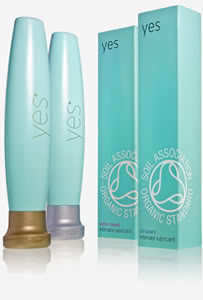
Organic Personal Lubricants - Water vs Oil based


Yes Water-based

  A unique dual purpose vaginal moisturiser and lubricant. For topical use to relieve discomfort or as a sexual lubricant.
  Formulated from water-retaining plant polymers to rehydrate delicate tissues.
  pH balanced to maintain the typical vaginal environment and combat thrush & irritation.
  Provides intensely realistic lubrication.
  Highly effective in treating the symptoms of vaginal dryness.
  Condom compatible.
  Available in applicators.

Yes Oil-based

  A strong, long-lasting lubricant, giving additional protection for dry and sensitive tissues.
  A natural alternative to synthetic chemical lubricants such as silicone or vaseline.
  Suitable for use as an intimate massage oil or all over the body
  Contains sweet almond oil, shea butter and cocoa butter for exceptional skin conditioning.
  Can protect and feed dry vaginal tissues. Will not, however, rehydrate vaginal tissues.
  NOT latex condom compatible.
  Not available in applicators.


You've read the entire article? Ok, lets go back to the Lubricant shopping page then

Yes Organic Lubricant - Customer Testimonials

I love it! It made me love having sex again! Thank you!!!!! It feels amazing to use a product that I have such trust in, there is no worry that I will be putting harmful chemicals into the most sensitive parts of my body. Really, thank you, thank you, thank you!!!!

Thank heavens, someone has developed an organic lubricant suitable for sex with and without condoms at last!

Unlike other commercial products, Yes not only lubricates, and moisturises it soothes vaginal dryness and it’s discreet unscented texture, builds confidence. Yes, Y es, Yes!

I have suffered from a yeast problem since 1993 and have tried every imaginable treatment for that condition. So you can imagine how elated I was when I found that the problem abated when I started using your product some months ago. I now use it twice daily to keep feeling yeast free. I think it has helped with the ph balance to bring about that very welcome change. Thank you so much!

Thank you so much for my YES lube. It arrived in very pretty packaging and my anticipation throughout the day was realized in a big way. With YES it is easy to forget you are using a lube as it is so realistic...This alone helped me to feel sexier than I have in a long time... It felt like we had just met and we had a wonderful evening. Thanks again.

It is as close to Nature as you could possibly get - it just feels like you!  Other lubricants have been really messy.  But Yes is unbelievable.  My search is over.

I thought I was careful about my choice of toiletries, beauty products etc. before, but now I am recovering from cancer I feel it is vital to replace as many chemical based products as possible with natural, harmless (but still high performing) ones.

To find a product that is Organic certified was an unexpected pleasure. I am very much into eating and drinking organic products at home, and ultimately I’m excited  to find a lubricant with quality ingredients and a conscious, ethical creative team behind it.

I Like to eat organic food, and use beauty and make up products that have as little messing around with them as possible, simple ingredients, no chemicals etc, so why not a lubricant-was delighted when I discovered it. Thanks!

Thanks so much – I was very impressed indeed! Even the most ‘gentle’ products….or so their marketing claims….can have nasty burning sensation effects, and Yes was everything I expected after looking at your info packed site. The packaging is very nice too – the dainty 25ml bottles are much nicer than whipping out an industrial sized container!

Sheer bliss, wish I had found this years ago, I would recommend this to anyone, thanks.

Yes was recommended by our Doctor and has saved our relationship. I love, love, love this product, and would never use another one.

It truly has been a new lease on life for me! No more visiting the local physicians who told me to use the products my body hated! Your product is EXCELLENT--no parabens, no silicone just great ingredients! I'm good to GO!

To start with, your utterly sensational product is something of a rarity in that it does exactly what it says it will do – although I have a slight suspicion that you might just be UNDERCLAIMING..! We discovered Yes after the birth of our first child, and continued to use it even when the initial problems had subsided. There is not a chance that we’ll EVER get bored with it, and so far the only problems we’ve encountered are connected to the process of getting ourselves down off the ceiling. Perhaps all orders should come with a free ladder – oh, and small earplugs for the baby...

Extremely delightful first time experience of lube.

I just wanted to say thank you for making this product. I had chronic dryness after nursing my second baby and 3 doc visits and a steroid cream later there was no improvement. I used this product as a female moisturizer for one week and abstained, I'll tell you what - it was like night and day the difference. I have no more problems, THANK YOU!

Still as “in love” with Yes now, as when I first discovered it.

I had to tell you how delighted I am with your product. I have tried many things over the years and this is the first thing that has helped me. I plan to talk to my doctor about it as I am sure there are many women who would benefit from Yes that are perhaps using HRT when Yes could solve their problem.

We are so pleased with your products. The water-based and oil-based work so well together….. My husband and I call it our “his and hers” combo! Thank you so much.

My partner and I am very impressed by the quality of this product.  Non-staining, odor-free, natural ingredients and feel, plus hypoallergenic! Seems like it wouldn't be possible for this all to exist in a lube but it does! Thank you!!!!

After doing some research, this was the only product I could find that didn't contain at least one worrisome ingredient. I hope that it works out well for me. Thanks.

Can’t use anything else!

I have already use one tube of YES and am very satisfied with your product.  I'm 54 years old and like the way it replaces my lost natural moisture.  Thank you!!!

Talk about slipping into something more comfortable ...yes we did.

"I use Yes to soothe my burning and intense itching.  I have been on other medical sites of ladies who have suffered  - and I have recommended your excellent product.

"It feels so natural - I couldn't have done better myself!

My “male menopause” husband has lately discovered the rejuvenating power of Viagra, which is great up to a point.  I “post menopause” have had a hard job keeping up with his ardour.  Your lubricant has changed everything – instead of our love making marathons being an ordeal of tiredness and dryness for me, I now can feel slippery, comfortable and freely passionate.

The sheer beauty of this lube – inside, outside – its quality of naturalness make it 'beyond organic' for me.

This is the nearest thing to me I have come across . . . subtle and sexy.

I want to express my recognition that Yes is so much more than just a lubricant, and my pleasure in experiencing its greatly enhancing attributes. I love its internal awakening properties which stay with me for a long time after using it, adding a new dimension to life.

Re-published with permission from http://yesyesyes.org

You've read the entire article? Ok, lets go back to the Lubricant shopping page then

Color I Color II Color III Color IV Color V Color VI